
The landscape of student loan repayment is constantly evolving, and with 2026 on the horizon, borrowers need to be more proactive than ever. Understanding and preparing for potential changes is not just about avoiding surprises; it’s about optimizing your financial future. This comprehensive guide provides a detailed 3-month action plan to help you navigate the upcoming 2026 student loan strategy, ensuring you are well-equipped to make informed decisions and minimize your debt burden.
The federal student loan system has seen significant shifts in recent years, from payment pauses to new income-driven repayment (IDR) plans like the SAVE plan. As we inch closer to 2026, it’s crucial to anticipate how these changes, and potentially new ones, will impact your specific situation. This article will break down what you need to know, what actions to take, and how to build a robust 2026 student loan strategy.
Anúncios
Preparing effectively means more than just knowing your loan balance. It involves understanding repayment options, potential policy shifts, and how to leverage available resources to your advantage. Let’s dive into your essential 3-month action plan.
Month 1: Assess Your Current Student Loan Landscape
The first step in any effective 2026 student loan strategy is a thorough assessment of your current financial situation and existing student loans. This isn’t just about knowing how much you owe; it’s about understanding the nuances of your debt.
Anúncios
1. Gather All Loan Information
Before you can plan, you need to know exactly what you’re working with. This means compiling detailed information for every single student loan you have, both federal and private.
- Federal Loans: Access your account on the Federal Student Aid (FSA) website. This is your primary source for federal loan information, including loan types (Subsidized, Unsubsidized, PLUS, Perkins, etc.), original balances, current balances, interest rates, loan servicers, and repayment history. Pay close attention to the disbursement dates, as these can impact eligibility for certain programs.
- Private Loans: Contact your private loan lenders directly or check your credit report. Private loans operate differently from federal loans, with varying terms, interest rates, and repayment options. Note down the lender, current balance, interest rate, and any specific terms or conditions.
- Loan Servicers: Identify all your loan servicers. Each servicer handles specific loans and will be your point of contact for payments, questions, and repayment plan adjustments. Keep their contact information handy.
2. Understand Your Loan Types and Interest Rates
Different loan types come with different rules and benefits. For instance, federal loans offer more protections and flexible repayment options than private loans. Understanding the interest rate for each loan is critical, as it directly impacts how much you’ll pay over time.
- Fixed vs. Variable: Determine if your interest rates are fixed (stay the same) or variable (can change over time). Variable rates introduce an element of unpredictability, which you’ll need to factor into your 2026 student loan strategy.
- Weighted Average Interest Rate: If you have multiple loans, calculate your weighted average interest rate. This gives you a clearer picture of your overall interest burden and can help prioritize which loans to tackle first if you decide to make extra payments.
3. Review Your Current Repayment Plan
Are you currently on the Standard Repayment Plan, an Income-Driven Repayment (IDR) plan (like PAYE, REPAYE, IBR, ICR, or the new SAVE plan), a Graduated Plan, or an Extended Plan? Each has different implications for your monthly payments and the total amount you’ll pay over the life of the loan.
- IDR Plan Details: If you’re on an IDR plan, understand when your annual recertification is due and what income information is used to calculate your payment. The SAVE plan, in particular, has significant benefits that many borrowers might overlook.
- Payment History: Review your payment history to ensure accuracy. Any discrepancies should be addressed immediately with your loan servicer.
4. Evaluate Your Financial Health
Your student loan strategy must fit within your broader financial picture. Take stock of your income, expenses, savings, and other debts.
- Budget Analysis: Create a detailed budget to understand your monthly cash flow. Where can you cut expenses? How much extra can you realistically allocate to student loans?
- Emergency Fund: Ensure you have an adequate emergency fund (3-6 months of living expenses) before making aggressive extra payments on your student loans. Financial security is paramount.
- Other Debts: Consider other high-interest debts, such as credit card balances. Sometimes, tackling these first can free up more cash flow to address student loans later.
By the end of Month 1, you should have a crystal-clear understanding of your student loan portfolio and how it fits into your overall financial life. This foundational knowledge is indispensable for crafting an effective 2026 student loan strategy.
Month 2: Explore Repayment Options and Potential 2026 Changes
With a solid understanding of your current situation, Month 2 focuses on exploring available repayment options and anticipating how the 2026 student loan landscape might shift. This involves research, understanding policy nuances, and considering different scenarios.
1. Deep Dive into Federal Repayment Plans
Federal student loans offer a range of repayment plans, each with its own advantages and disadvantages. It’s crucial to understand them, especially in light of upcoming changes.
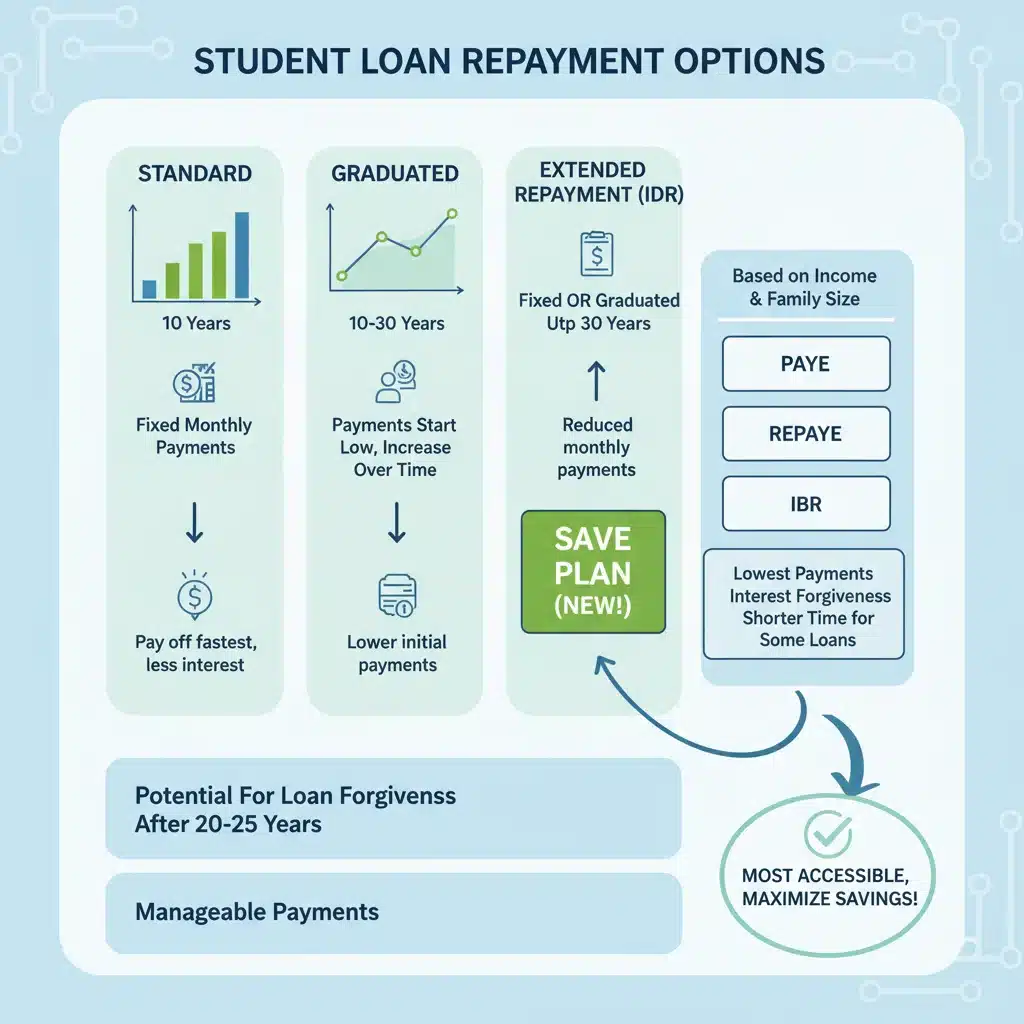
- Standard Repayment Plan: Fixed payments over 10 years. Good if you can afford it and want to pay off debt quickly.
- Graduated Repayment Plan: Payments start low and increase every two years, over 10 years.
- Extended Repayment Plan: Fixed or graduated payments over 25 years. Can lower monthly payments but increases total interest paid.
- Income-Driven Repayment (IDR) Plans: Payments are based on your income and family size. After 20 or 25 years (or even 10 years for Public Service Loan Forgiveness), any remaining balance is forgiven.
The SAVE Plan (Saving on a Valuable Education) is particularly important. This new IDR plan, fully implemented in July 2024, offers significant benefits:
- Lower Payments: Payments for undergraduate loans are calculated at 5% of discretionary income (down from 10% on other IDR plans) and 10% for graduate loans (or a weighted average for both).
- Interest Subsidy: If your monthly payment doesn’t cover the accrued interest, the government covers the remaining interest, preventing your balance from growing. This is a game-changer for many borrowers.
- Shorter Forgiveness: Forgiveness could occur as early as 10 years for borrowers with original loan balances of $12,000 or less.
- Increased Income Exemption: Discretionary income calculation excludes 225% of the federal poverty line, up from 150%.
Understanding if the SAVE plan is right for your 2026 student loan strategy is paramount. Use the Loan Simulator on StudentAid.gov to compare different plans and see how they impact your payments and total cost.
2. Investigate Loan Forgiveness Programs
Don’t overlook potential forgiveness opportunities. These can significantly reduce your debt burden.
- Public Service Loan Forgiveness (PSLF): If you work for a government agency or eligible non-profit organization, PSLF can forgive the remaining balance on your Direct Loans after 120 qualifying monthly payments while working full-time. Ensure your employer qualifies and you’re on an eligible repayment plan (typically an IDR plan).
- Teacher Loan Forgiveness: For teachers in low-income schools, this program can forgive up to $17,500 of Direct Subsidized and Unsubsidized Loans.
- State-Specific Programs: Many states offer their own loan repayment assistance programs for professionals in high-need areas (e.g., healthcare, law). Research what’s available in your state.
3. Consider Loan Consolidation and Refinancing
These are two distinct strategies with different implications for your 2026 student loan strategy.
- Federal Direct Consolidation Loan: This combines multiple federal loans into a single new loan with a single servicer and one monthly payment. The interest rate is the weighted average of your original loans, rounded up to the nearest one-eighth of a percentage. Consolidation can make you eligible for certain IDR plans and PSLF if you have older FFELP or Perkins loans, but it can also reset your payment count for forgiveness programs.
- Private Loan Refinancing: This involves taking out a new private loan to pay off existing federal and/or private student loans. The goal is typically to get a lower interest rate, which can save you a significant amount over time. However, refinancing federal loans into a private loan means losing federal benefits like IDR plans, forbearance, deferment, and access to forgiveness programs. This is a decision that requires careful consideration.
4. Anticipate 2026 Policy Changes
While specific 2026 changes are hard to predict, staying informed is key. The Department of Education continually reviews and adjusts policies. Keep an eye on:
- Congressional Discussions: New legislation could impact loan terms, interest rates, or forgiveness programs.
- Department of Education Announcements: Official statements from the DOE are the most reliable source of information regarding policy shifts.
- Economic Conditions: Broader economic trends can influence governmental decisions regarding student loan relief or adjustments.
Subscribe to updates from StudentAid.gov and reputable financial news sources. By the end of Month 2, you should have a clear understanding of all your viable repayment paths and potential future scenarios, allowing you to formulate a robust 2026 student loan strategy.
Month 3: Implement and Optimize Your 2026 Student Loan Strategy
Now that you’ve assessed your situation and explored your options, Month 3 is all about taking action and fine-tuning your 2026 student loan strategy.
1. Choose Your Optimal Repayment Plan
Based on your research in Month 2, select the repayment plan that best aligns with your financial goals, income, and debt level. For many, especially those with lower incomes relative to their debt, the SAVE plan will be a highly attractive option due to its interest subsidy and lower payments.
- Apply for Your Chosen Plan: If you’re changing plans or enrolling in an IDR plan for the first time, complete the application through your loan servicer or StudentAid.gov. Be prepared to provide income documentation.
- Recertification Dates: If you’re on an IDR plan, mark your calendar for your annual recertification date. Missing this can lead to your payments reverting to the Standard Plan, potentially increasing your monthly obligation significantly.
2. Consolidate or Refinance If Strategic
If you determined in Month 2 that consolidation or refinancing is beneficial for your 2026 student loan strategy, now is the time to act.
- Federal Consolidation: Apply for a Direct Consolidation Loan through StudentAid.gov. Ensure you understand the implications for any forgiveness programs you might be pursuing.
- Private Refinancing: Research multiple private lenders to compare interest rates, terms, and borrower benefits. Get quotes from several lenders before committing. Remember the trade-offs of losing federal protections.
3. Automate Payments and Consider Extra Payments
Automation can prevent missed payments, which can harm your credit score and accrue late fees. Many servicers also offer a slight interest rate reduction for enrolling in auto-pay.
- Set Up Auto-Pay: Ensure your bank account has sufficient funds to cover automated payments.
- Target High-Interest Loans (Avalanche Method): If you have extra funds, consider applying them to the loan with the highest interest rate first, while making minimum payments on all other loans. This is known as the debt avalanche method and typically saves you the most money over time.
- Target Smallest Loans (Snowball Method): Alternatively, the debt snowball method involves paying off the smallest loan first to build momentum. While not mathematically the cheapest, it can be psychologically motivating.
4. Build a Financial Buffer and Emergency Fund
A robust emergency fund is a cornerstone of financial stability. Aim for 3-6 months of essential living expenses. This fund protects you from unexpected costs, preventing you from missing loan payments or incurring new debt.
- Start Small: If you don’t have an emergency fund, start by saving a small, consistent amount each month.
- Separate Account: Keep your emergency fund in a separate, easily accessible savings account, distinct from your checking account.
5. Stay Informed and Adapt
The 2026 student loan strategy isn’t a one-time fix; it’s an ongoing process. The policy environment can change, and your personal financial situation will undoubtedly evolve.
- Regularly Check StudentAid.gov: Make it a habit to visit the official FSA website for the latest news and updates.
- Review Your Strategy Annually: At least once a year, revisit your student loan strategy. Are you still on the best repayment plan? Has your income changed? Are there new programs you qualify for?
- Consult a Financial Advisor: If your situation is complex, or you’re unsure about the best path forward, consider consulting a certified financial planner who specializes in student loan debt.
By diligently following this 3-month action plan, you will not only be prepared for the 2026 student loan landscape but will also have established a proactive and resilient approach to managing your student debt for years to come.

Advanced Strategies for Your 2026 Student Loan Strategy
Beyond the core 3-month plan, there are additional advanced strategies that can further optimize your 2026 student loan strategy, especially for those with unique financial situations or aggressive repayment goals.
1. Tax Implications of Student Loan Forgiveness
It’s crucial to understand the tax implications of any loan forgiveness. While federal student loan forgiveness under IDR plans is currently tax-free through 2025 due to the American Rescue Plan Act, this provision is set to expire. If you anticipate forgiveness in 2026 or later, you might face a ‘tax bomb’ – the forgiven amount could be considered taxable income by the IRS.
- Research State Tax Laws: Some states also tax forgiven debt, while others do not.
- Plan for Potential Taxes: If you expect a large amount of forgiveness, consult a tax professional to understand potential liabilities and plan accordingly, possibly by saving for future tax payments.
2. Employer Student Loan Assistance Programs
A growing number of employers are offering student loan assistance as a benefit. This can take several forms:
- Direct Contributions: Some companies contribute directly to your student loan payments.
- Matching Programs: Similar to 401(k) matches, employers might match your student loan payments up to a certain percentage.
- Financial Wellness Programs: These programs often include access to financial advisors who can help you navigate your student loan options.
Check with your HR department to see if your employer offers any such benefits. This could significantly enhance your 2026 student loan strategy.
3. Leveraging Windfalls and Bonuses
If you receive unexpected money, such as a tax refund, work bonus, or inheritance, consider dedicating a portion of it to your student loans. Even a single lump-sum payment can make a substantial difference in the total interest paid and the repayment timeline, especially if applied to a high-interest loan.
4. Understanding Deferment and Forbearance
While not ideal for long-term repayment, deferment and forbearance can offer temporary relief during periods of financial hardship. However, interest often continues to accrue during these periods, increasing your total debt.
- Deferment: Available for specific situations like unemployment, economic hardship, or military service. Interest typically doesn’t accrue on subsidized federal loans during deferment.
- Forbearance: Granted by your servicer, usually for up to 12 months at a time, if you’re experiencing financial difficulty. Interest accrues on all loan types during forbearance.
Use these options sparingly and only when absolutely necessary, as they can prolong your repayment and increase costs. Always explore IDR plans first, as they adjust payments based on income without accruing unpaid interest on subsidized loans under the SAVE plan.
5. The Role of Credit Score in Student Loan Management
Your credit score plays a vital role, especially if you consider private refinancing. A higher credit score can qualify you for lower interest rates.
- Monitor Your Credit: Regularly check your credit report for errors.
- Make On-Time Payments: Payment history is the most significant factor in your credit score.
- Manage Other Debts: Keep credit card balances low and pay other bills promptly.
A strong credit profile is an asset in your overall financial toolkit and can open doors to better loan terms, supporting your 2026 student loan strategy.
Conclusion: Your Empowered 2026 Student Loan Strategy
Navigating the complex world of student loans, especially with an eye toward future changes like those in 2026, requires diligence, understanding, and proactive planning. This 3-month action plan provides a structured approach to assess your current situation, explore all available options, and implement a strategy that minimizes your debt burden and aligns with your financial goals.
Remember, your 2026 student loan strategy is not static. It requires ongoing attention, regular reviews, and a willingness to adapt as policies change and your personal circumstances evolve. By taking control now, you are not just preparing for 2026; you are building a foundation for long-term financial wellness and peace of mind.
Don’t let the complexities overwhelm you. Break down the task into manageable steps, utilize the resources available on StudentAid.gov, and don’t hesitate to seek professional advice when needed. Your financial future is in your hands, and with this comprehensive guide, you are well-equipped to make the most informed decisions possible for your student loan repayment journey.